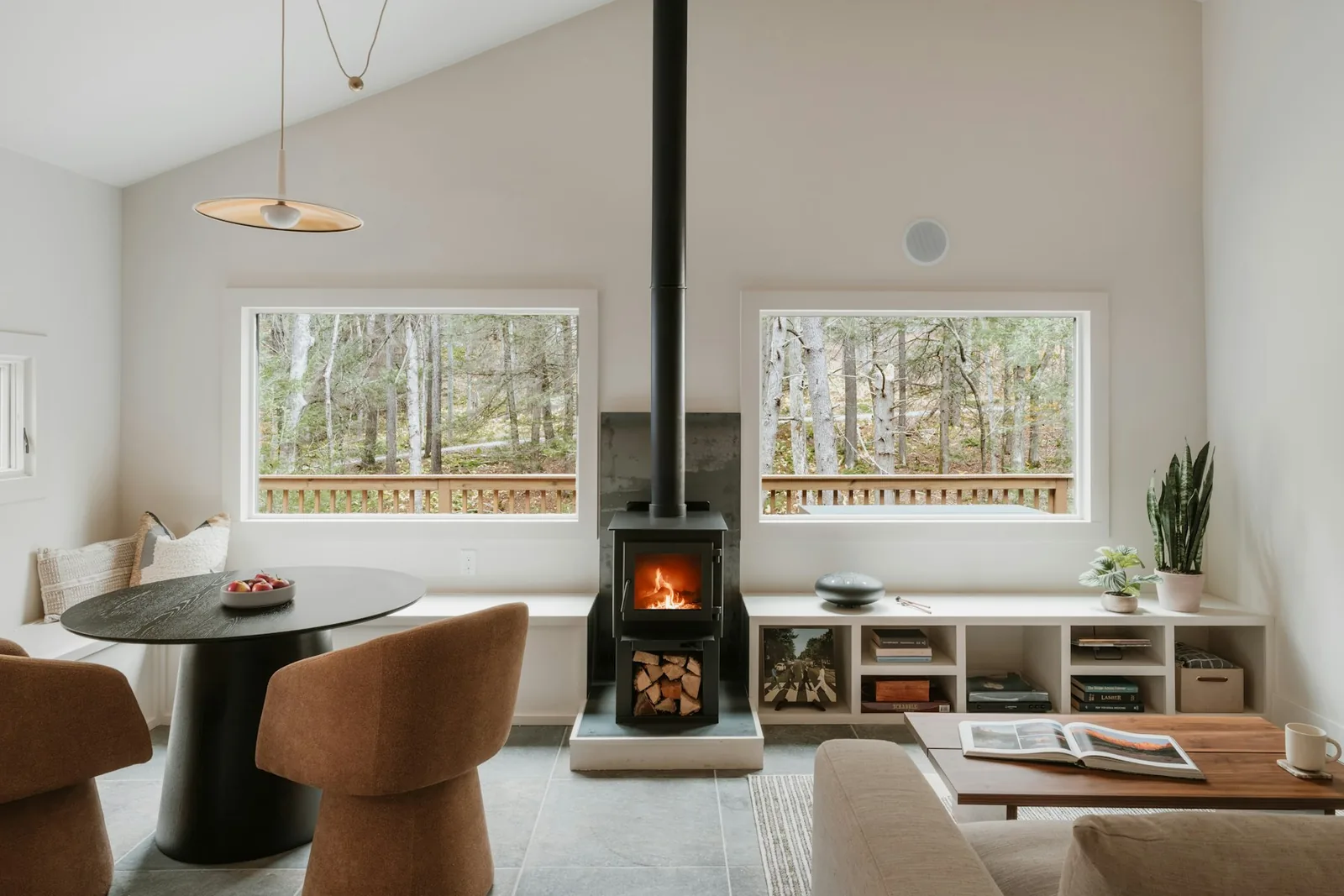
Wood Stove, Insert and Pellet Stove Cleaning
A stove that runs most of the winter builds up faster than an open fireplace. We clean the stove, its pipe and the flue, and price it at the free inspection before any work.
Stoves are where most real wood heat happens in the region. Statewide, 2.8% of Washington homes heat mainly with wood, twice the national share by the Census count, and plenty of other homes keep a stove or insert as backup heat. A stove that runs every evening from November to March fills its pipe and flue far faster than a fireplace lit on holidays.
Cleaning a stove means more than the chimney. We clear the baffle or the area above it, the stovepipe, the connector and the flue. With an insert, we check whether it can be cleaned in place or needs to be pulled out to reach the liner. Pellet stoves get their burn pot, ash traps and vent cleared as well. All of it is priced at the free inspection, in writing, before we start.
Signs you need this
- The stove runs most days through the winter
- Glass that blackens within a day or two of cleaning
- Less heat from the same amount of wood or pellets
- Smoke puffs into the room when you open the door
- A pellet stove that shuts down, alarms or fills with ash
How we do it
- Inspect and priceWe look at the stove, door gaskets, pipe and flue, and give you a written price for the cleaning.
- Stove and baffleWe clear ash and buildup from the firebox, the baffle area and any secondary air parts.
- Pipe and flueThe stovepipe and chimney flue are brushed and vacuumed. An insert may need to be slid out to reach the liner.
- Reassemble and checkWe put everything back, check the door seal and the draft, and photograph the result.
Which stoves can I use during a Puget Sound burn ban?
During a Stage 1 ban, the Puget Sound Clean Air Agency allows EPA-certified wood stoves and inserts as long as they produce no visible smoke. Uncertified stoves and open fireplaces must stay cold. During a Stage 2 ban, no wood stove, insert or fireplace may be used, certified or not, unless the home holds an approved exemption.
Burn ban violations carry a $1,000 penalty, according to the agency. If a ban starts while a fire is going, the agency says not to add fuel and simply let it burn out. Alerts come by email, on the agency's site and on the burn ban line, 800-595-4341.
What if my stove is old and uncertified?
Washington law bars selling, giving away or reinstalling a used uncertified stove. You can keep using one outside burn bans in most of the region, but inside the Tacoma-Pierce County Smoke Reduction Zone it has been illegal to operate since October 1, 2015. Check the zone map on the clean air agency's site.
The agency currently pays $500 to homeowners in King, Kitsap, Pierce and Snohomish counties who recycle an uncertified stove or insert, or a certified one older than the 2020 EPA standard. We can tell you whether yours qualifies when we clean it.
How often does a stove need cleaning?
A wood stove in daily use usually needs a cleaning at least once a year, and some need a check partway through winter if the wood is damp. Pellet stoves need regular ash cleaning by the owner, plus a yearly cleaning of the vent and inner passages.
We set the next visit based on what we find in the pipe and flue, not a fixed calendar.
FAQ
Wood & Pellet Stove Cleaning questions
How much does stove cleaning cost?
The price is written at the free inspection. Inserts that need to be pulled out take longer than a freestanding stove, so we see the setup first.
Do you clean pellet stoves?
Yes. We clean the burn pot, ash traps, the heat exchanger passages and the vent.
Do you replace door gaskets?
We check them at every cleaning and can replace a worn gasket. A tight door gives you better control of the fire.
Can I burn during a Stage 1 ban if my stove is certified?
According to the Puget Sound Clean Air Agency, yes, if it makes no visible smoke. Not in Stage 2.
Is there help paying to replace an old stove?
The clean air agency pays $500 to recycle eligible old stoves and inserts. The federal tax credit for wood stoves ended after December 31, 2025.
Related
Cleaning, inspections and smoke
Book online
Pick a day. We'll bring a ladder.
Free inspection in a 3-hour window: 8 to 11, 11 to 2, or 2 to 5. We call to confirm before we arrive.