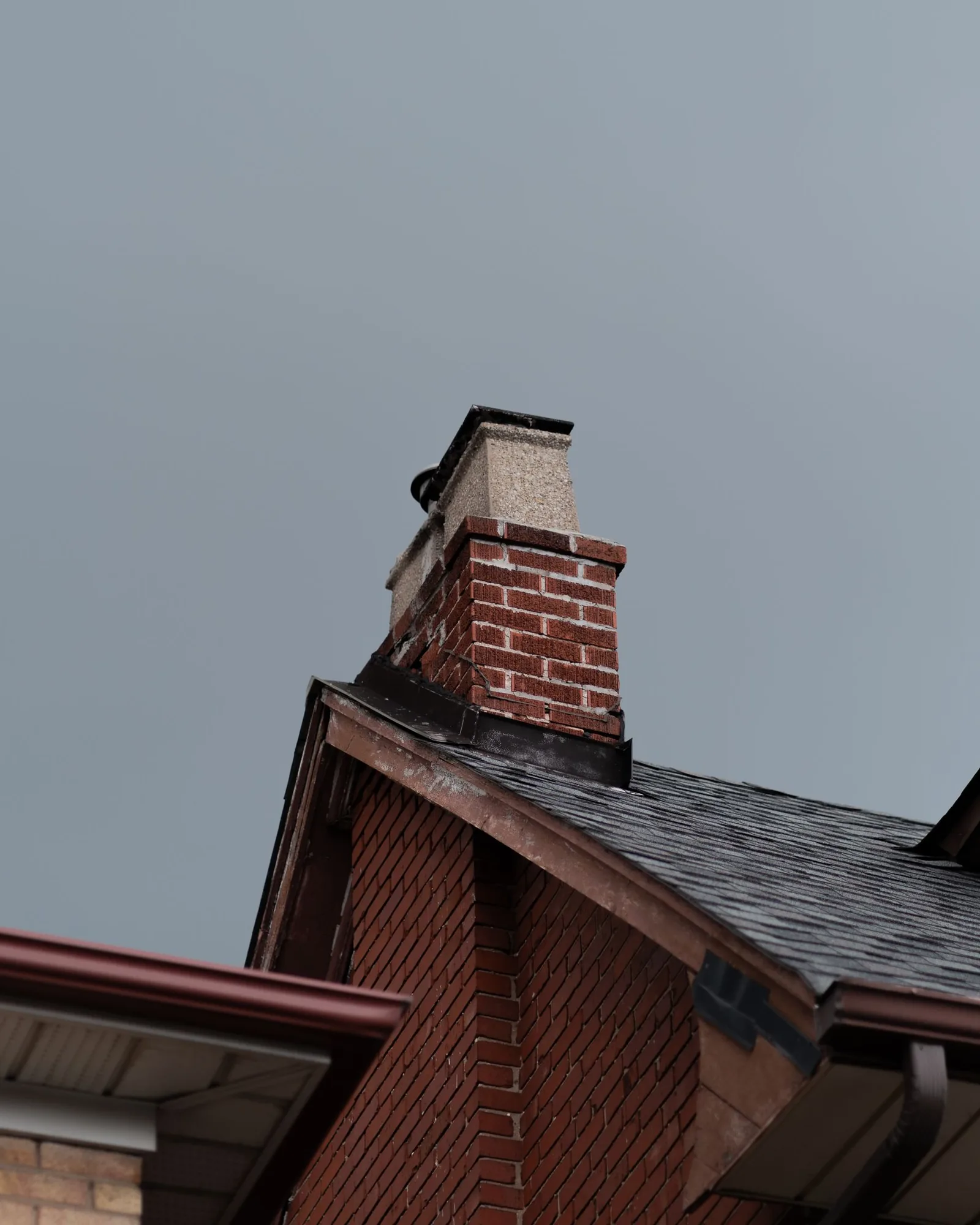
Chimney Caps and Chase Covers in Seattle
A cap keeps rain, leaves and animals out of an open flue. A chase cover does the same on a framed prefab chimney. Caps typically run $250 to $850.
An open flue in Seattle is a rain gauge. With roughly 156 days of measurable rain a year at Sea-Tac, water goes straight down an uncapped chimney onto the damper, the smoke shelf and the firebox floor, and rusts anything made of steel on the way. A cap with a hood and a mesh screen keeps the water and the leaves out, and stops birds, squirrels and raccoons moving in.
Newer homes on the Eastside and in Snohomish County often have a prefab fireplace in a framed chase, a box built with siding instead of brick. Its top is a metal chase cover. Older galvanized covers rust, dish in the middle and hold water, which then runs down the inside of the chase into the walls and ceiling. A stainless cover with a slope sheds that water.
Signs you need this
- No cap at all on top of the chimney
- Rust streaks running down a framed chase or its siding
- Water or debris on the fireplace floor after rain
- Birds or squirrels heard in the flue
- A bent, loose or rusted-through cap or mesh
How we do it
- Measure every flueAt the free inspection we measure the flue or flues and the crown, and note whether the chimney is masonry or a framed chase.
- Choose the right styleA single-flue cap, a cap covering several flues, or a sloped chase cover with its own cap, sized so it does not choke the draft.
- Fit it securelyCaps are fastened so wind cannot lift them. Chase covers are sealed at the edges so water sheds off the sides, not into the chase.
- Check the rest of the topWhile we are on the roof we look at the crown and flashing and photograph anything that will let water in.
Which type of cap does my chimney need?
A single clay flue usually takes a stainless cap that clamps or screws onto the tile, typically $250 to $500. A chimney with two or more flues, or an odd-sized crown, takes a larger cap that covers the whole top, typically $425 to $850. Stainless lasts longer in steady rain than painted or galvanized steel. We do not use copper next to zinc moss treatments, because zinc sulfate corrodes copper.
Why do chase covers fail?
Most builder-grade chase covers are thin galvanized steel cut flat. Over the years they sag in the middle, hold a puddle and rust through, and the water finds its way down the inside of the chase. You often see it as rust streaks on the siding or a stain on the ceiling near the fireplace. A replacement stainless chase cover with a raised center typically costs $300 to $700.
Will a cap affect my fireplace draft?
A correctly sized cap should not. The open area of the cap has to be at least as big as the flue. A cap that is too small, or a mesh clogged with soot and needles, can make a fireplace smoke. We size it to the flue and check that the screen is clear when we sweep.
FAQ
Chimney Caps & Chase Covers questions
How much does a chimney cap cost in Seattle?
A single-flue stainless cap typically costs $250 to $500. A multi-flue or custom cap typically costs $425 to $850. A chase cover for a prefab chimney typically costs $300 to $700.
Does every chimney need a cap?
We recommend one on every open flue, because rain and animals do real damage in an uncapped chimney here. We do not claim a cap is required by code where we have not confirmed it.
Do gas fireplaces need a cap?
Gas fireplace vents come with their own termination cap from the manufacturer. If it is damaged or missing, it should be replaced with the correct part for that unit.
Can animals get in through a cap?
Not through a sound one. Damage, rust or a mesh that has come loose can let them in. If an animal is already inside, we remove it first and then fit the cap.
Can you replace just the mesh?
Sometimes, if the cap body is sound. Often the mesh and the frame have rusted together, and a new stainless cap is the better buy.
Book online
Pick a day. We'll bring a ladder.
Free inspection in a 3-hour window: 8 to 11, 11 to 2, or 2 to 5. We call to confirm before we arrive.