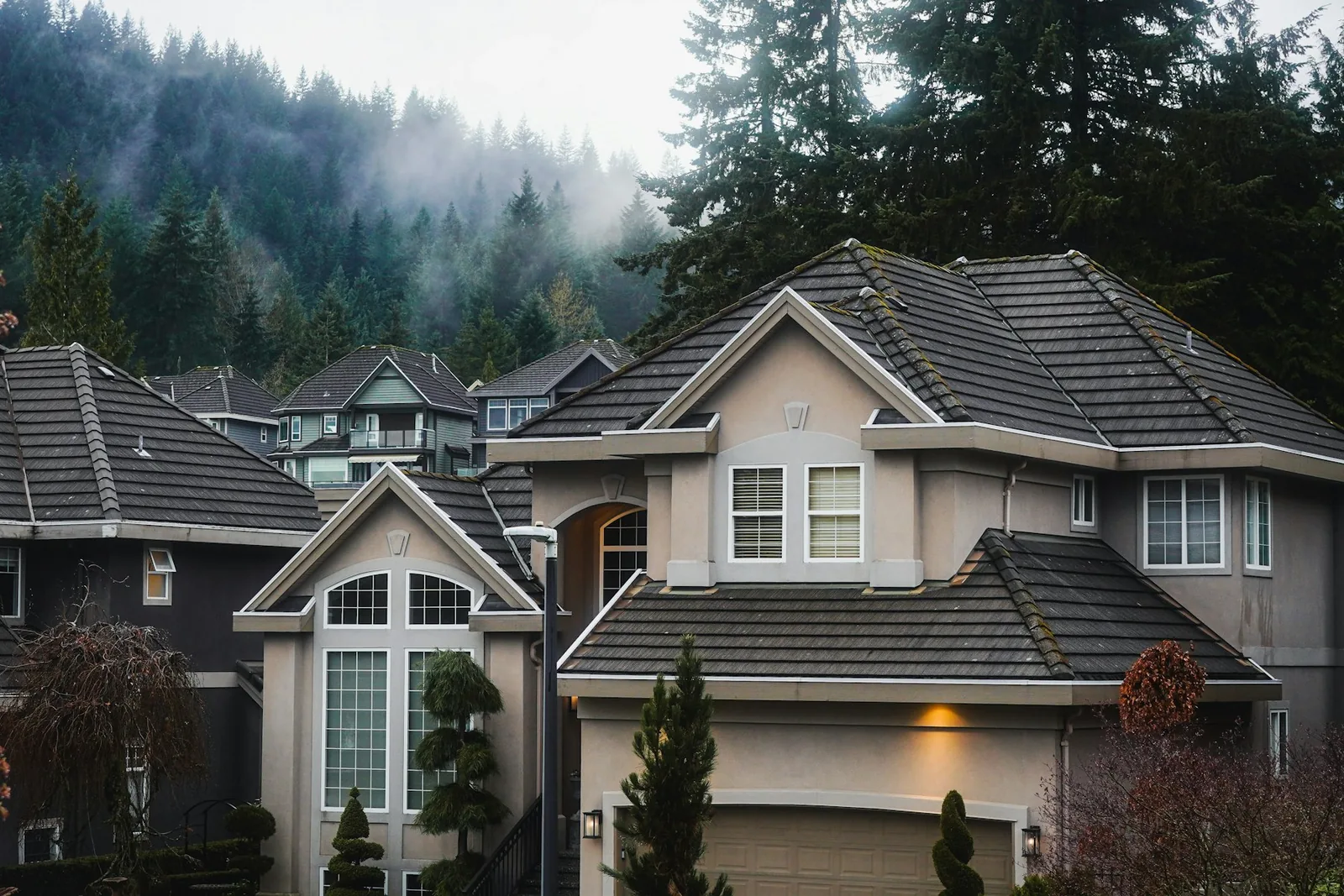
Chimney and fireplace service in Snohomish County
Everett's Paine Field logs rain on about 178 days a year, and Snohomish County burns more wood than King. We inspect for free and write the price down first.
The north end is wetter in days, if not in inches. NOAA's 1991 to 2020 normals give Everett's Paine Field about 33 inches of rain a year spread over roughly 178 days, against 156 days at Sea-Tac, plus about 29 nights at or below freezing. A chimney here barely dries out between October and May, which is why cracked crowns, rusted caps and failed flashing are the first things we look for on every roof.
Wood still matters here. The Census Bureau's 2024 survey finds 2.3 percent of Snohomish County homes heating mainly with wood and 4 percent with propane, against 0.6 and 1.4 percent in King County, and outside the cities the share is higher still. That means more stoves and inserts burning all winter and more liners to clean. Everett is the exception in age: 15.6 percent of its homes were built before 1940, mostly on the north end peninsula.
Burn bans come sooner in Snohomish County
The Puget Sound Clean Air Agency uses a lower trigger here. In Snohomish and Pierce counties a Stage 1 ban can be called when fine particles are forecast above 30 micrograms per cubic meter within 72 hours; in King County the trigger is 35 within 48 hours. Bans can also cover just part of Snohomish County. In Stage 1, wood fireplaces and uncertified stoves and inserts cannot be used; in Stage 2, no wood burning at all. Gas and propane units are allowed in both.
If you burn wood for real heat, an EPA-certified stove or insert keeps you burning through a Stage 1 ban as long as there is no visible smoke. The agency's recycling program pays $500 to retire an uncertified stove or insert. Typical ranges: an EPA-certified wood stove installed $3,000 to $8,000, a wood insert with liner $3,000 to $7,000.
Selling a house with an old wood stove
Washington does not require an uncertified stove to be removed when a house is sold; the Department of Ecology says so directly, and state law bars local time-of-sale removal rules. What the seller must do is answer the Form 17 disclosure, which asks whether the house has a woodstove or insert and whether it is EPA-certified. We check the label and the chimney at the free inspection so you can answer it accurately.
FAQ
North End & Snohomish County questions
Why are there more burn bans in Snohomish County than in Seattle?
Because the trigger is lower. The Puget Sound Clean Air Agency can call a Stage 1 ban in Snohomish and Pierce counties when fine particles are forecast above 30 micrograms per cubic meter within 72 hours, against 35 within 48 hours in King County.
How often should a wood stove chimney be cleaned?
NFPA 211 calls for an inspection at least once a year and cleaning when needed. A stove or insert used all winter often needs more than one cleaning a season. We price the cleaning at the free inspection, once we have seen the flue.
Do I have to remove my uncertified wood stove to sell my house?
No. Washington's Department of Ecology says removal is not required when buying or selling a house. The seller must disclose the stove and whether it is EPA-certified on Form 17. You still cannot sell or reinstall the stove itself.
When can you come?
We book Sunday through Friday in 3-hour windows: 8 to 11, 11 to 2 or 2 to 5. We call ahead to confirm. We are closed Saturday.
Book online
Pick a day. We'll bring a ladder.
Free inspection in a 3-hour window: 8 to 11, 11 to 2, or 2 to 5. We call to confirm before we arrive.