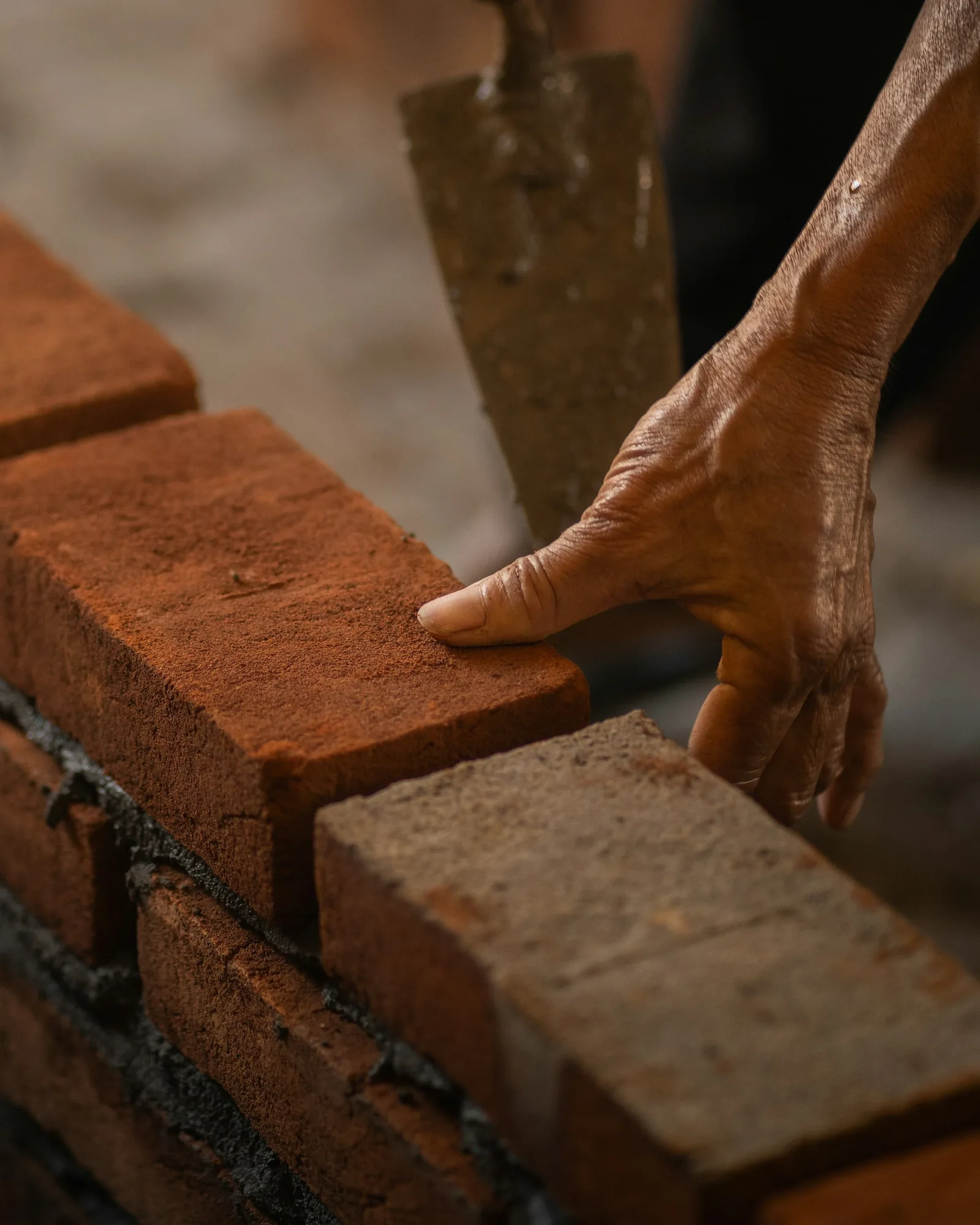
Repointing a Craftsman chimney: why soft mortar matters
Old Seattle brick was laid in soft mortar, and the repair mortar must stay softer than the brick. The National Park Service warns that mortar harder than the brick will not give, so stress goes into the bricks and causes cracking and spalling. Use a compatible, often lime-rich mix.
Seattle Fireplace & Chimney · October 13, 2026
The houses this is about
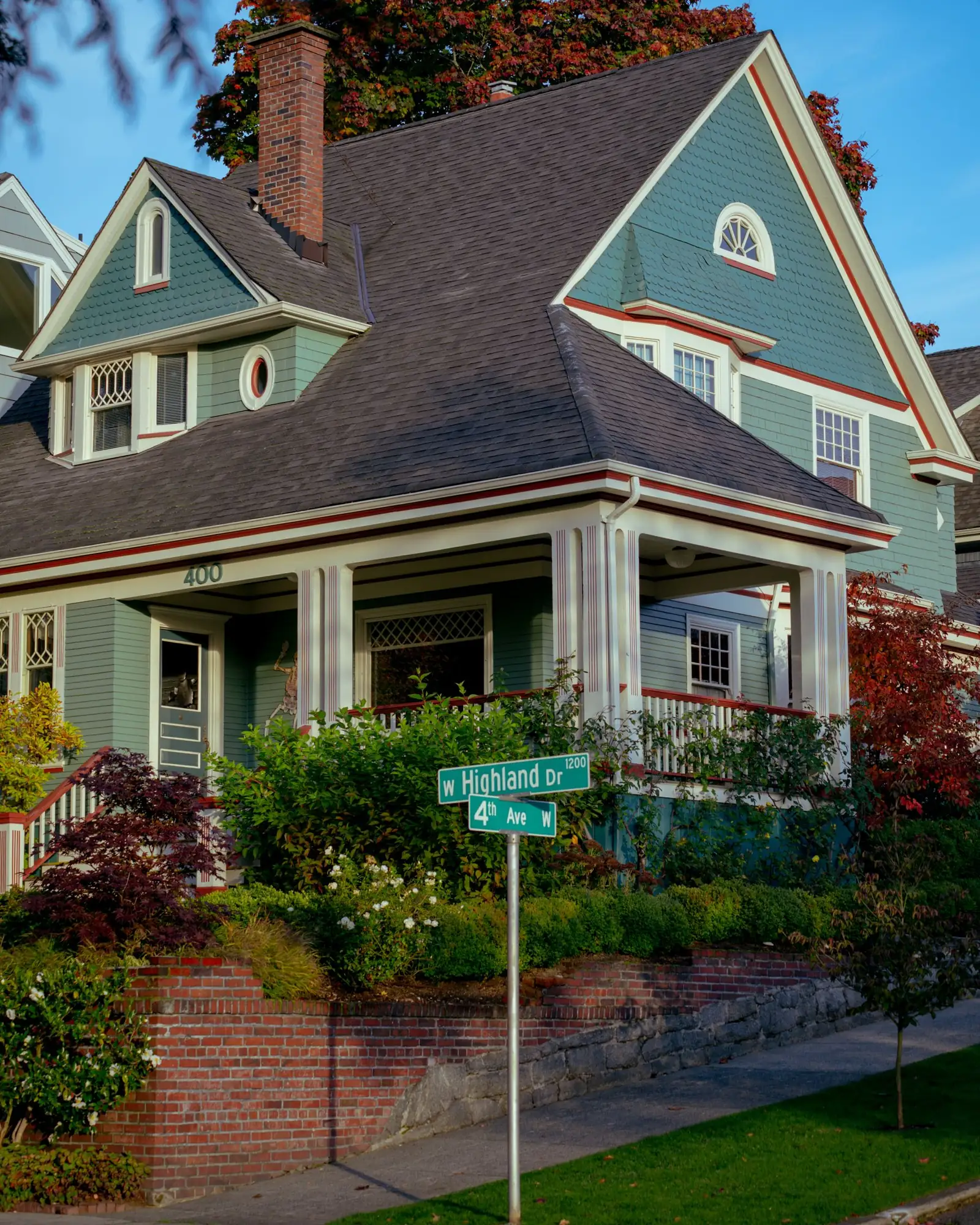
Seattle has a lot of old brick. Census data (American Community Survey, 2020 to 2024) shows 22.8 percent of Seattle homes and 26.9 percent of Tacoma homes were built in 1939 or earlier, about twice the national share. HistoryLink calls the Craftsman bungalow Seattle's signature style and notes the city's high concentration of them; a 1915 Bungalow Magazine feature it cites showed the regional clinker-brick look. Add the Seattle Box, the local take on the Foursquare, and the brick Tudor Revival houses of the 1920s, and you have tens of thousands of chimneys more than a century old.
Most of those chimneys were laid with mortar that is softer and more porous than what a hardware store sells today. That is not a defect. It is how the wall was designed to work.
What repointing is
Repointing means raking out deteriorated mortar to a sound depth and filling the joints with new mortar. People often call it tuckpointing, and contractors use the words interchangeably. The National Park Service's Preservation Brief 2, the standard reference on the subject, notes that tuckpointing technically describes a decorative raised joint, a different thing. What matters is the mortar that goes back in, not the name.
Why softer mortar matters
Preservation Brief 2 explains the problem clearly. Mortar that is harder than the brick will not give as the wall expands, contracts and settles, so the stress goes through the bricks instead, resulting in permanent damage such as cracking and spalling. The mortar joint is supposed to be the part that wears out and gets replaced, not the brick.
Moisture is the second reason. The NPS brief says that if mortar does not let moisture out, the masonry units are damaged, and salts crystallizing inside the masonry can make the surface spall off. In a climate where Sea-Tac sees measurable rain on about 156 days a year (NOAA 1991 to 2020 normals), water will get into a chimney. The mortar has to let it back out.
So the new mortar should match the old in strength, color and texture. For a chimney built in the 1900s to 1930s, that usually means a lime-rich mix rather than a hard, cement-heavy one. Getting this wrong does not show up the first winter. It shows up a few years later as faces popping off the brick.
Signs it is time
Walk around the house and look up, or use binoculars from the yard. The top of the chimney, above the roofline, takes the most weather and usually goes first.
- Mortar that is recessed, sandy, or can be scratched out with a key.
- Gaps where mortar has fallen out of the joints entirely.
- Brick faces flaking or popping off (spalling).
- White salt deposits on the brick (efflorescence), a sign water is moving through.
- Bits of mortar or brick on the roof, in the gutter or in the firebox.
- Earlier patching in grey, hard-looking mortar next to softer original joints.
How the work should be done
Good repointing is slow work. Joints are cleared to a consistent depth without chipping the brick edges, the new mortar is packed in layers, and the joint profile is matched to the original so the repair does not stand out. Badly damaged bricks are cut out and replaced with matching brick rather than patched over.
Typical 2026 ranges: repointing $500 to $2,500, and spalled brick replacement $1,000 to $3,500. If the top courses are too far gone, rebuilding them runs $1,000 to $3,500. Our inspection is free: we look at the chimney top to bottom, take photos and give you a written price before any work.
Seattle rules that touch repointing
Seattle's chimney repair rule, Director's Rule 5-2004, exempts minor patching, and it requires any unreinforced masonry left in place during a repair to be inspected and tuckpointed as needed. Larger work falls under the rule's reinforcement and bracing requirements; confirm current requirements with SDCI.
If your house is in a Seattle historic district such as Harvard-Belmont, exterior changes need a Certificate of Approval even when no permit is needed. Repair in kind, with the same materials and details, does not, but the board coordinator must confirm it is in kind before work starts. Matching soft mortar is part of what makes a repair in kind.
FAQ
More answers
Is tuckpointing the same as repointing?
In everyday use, yes. The National Park Service's Preservation Brief 2 notes tuckpointing technically means a decorative raised joint, but most people use both words for replacing worn mortar.
Can I seal the chimney after repointing?
Only with a breathable water repellent, and only if the masonry needs it. NPS guidance is that masonry must be able to release moisture.
Can I repoint my chimney myself?
Small, low sections, maybe. The chimney top is on a steep, often mossy roof, and the mortar match is easy to get wrong. Hard mortar in soft brick does more harm than an open joint.
Do I need a permit to repoint in Seattle?
Under DR 5-2004, minor patching is exempt, and repairs under $4,000 need no permit but must follow the rule. Confirm current requirements with SDCI.
Keep reading
More from the blog
 Can I use my fireplace during a burn ban in Seattle?What Stage 1 and Stage 2 burn bans mean for wood fireplaces, certified stoves, pellet stoves and gas fireplaces in King, Pierce, Snohomish and Kitsap.
 Do I have to remove an old wood stove before selling my Washington home?Washington does not require removing an uncertified wood stove before a home sale. What Form 17 asks, the Tacoma zone exception, and your options.
 Tacoma's old wood stove rule and the $500 recycling paymentSince 2015, uncertified wood stoves are illegal to use in the Tacoma-Pierce Smoke Reduction Zone. How to check the zone and claim PSCAA's $500 payment.
Book online
Pick a day. We'll bring a ladder.
Free inspection in a 3-hour window: 8 to 11, 11 to 2, or 2 to 5. We call to confirm before we arrive.